Initializing conceptual digital twin…
Ruben V. Feliu
AI Data Center Power Infrastructure
From Energy Source to Compute.
Integrated strategy, engineering, controls, cybersecurity, program delivery and operational readiness for next-generation AI infrastructure.
Available for advisory engagements
Simulated campus — not operating measurements
What is an AI Factory?
More Than a Data Center
An AI Factory is infrastructure engineered to continuously transform energy, data and computing resources into AI capability. Unlike conventional enterprise data centers, large AI campuses can concentrate extraordinary compute density and create highly dynamic electrical and thermal demands.
Supporting systems
POWER
Each layer only delivers value when engineered, integrated, tested and operated as part of one coordinated platform — power to compute.
What does success require?
What Does It Take to Make an AI Power Campus Successful?
Eight pillars — connected by shared requirements, interfaces and testing — determine whether a campus energizes on time and operates as designed.
Speed to Power
Interconnection strategy, permitting, generation strategy, long-lead equipment and phased energization.
Reliability
N+1 / resilience philosophy, generation availability, BESS support, backup systems and operational readiness.
Grid Stability
Load-flow, transient, short-circuit, harmonics, dynamic studies, frequency response and voltage performance.
Integrated Control
EMS, microgrid control, generation controls, protection, SCADA, DCIM and compute coordination.
Cybersecurity
Secure OT architecture, segmentation, remote access, identity, monitoring, incident response and compliance.
Commissioning
FAT, SAT, SIT, UAT, protection validation, end-to-end testing and scenario testing.
Operational Readiness
Procedures, training, control-room readiness, maintenance strategies and operational governance.
Program Integration
One program structure connecting engineering, vendors, controls, construction, IT/OT, commissioning and operations.
The critical challenge is not any single piece of equipment. It is making every system operate as one coordinated infrastructure platform.
System architecture
Energy-to-Compute Architecture
One continuous engineered chain — physical power delivery below, the digital control layer above. Hover a control system to see what it supervises.
Control architecture
Main + Backup Control
Operations continuity is engineered, not assumed. A geographically separated backup control center with redundant OT network paths keeps the campus operable through loss of the primary facility.
PRIMARY
Primary Control Center
Redundant OT networks · Diverse paths
BACKUP / DISASTER RECOVERY
Backup Control Center
Geographically separated from the primary facility — a deliberate siting decision visible in the campus masterplan.
Exact redundancy and failover architecture is project-specific and should be established through the project's availability, cybersecurity and operational requirements.
Workstream / team explorer
An Integrated Program Requires an Integrated Team
Power-to-compute programs require specialists working across shared requirements, interfaces, testing and operational outcomes. Select a workstream to see its specialists, capabilities — and the campus assets it touches.
01 — Workstream
Program Leadership & PMO
Specialists
Capabilities
- Integrated master schedule
- Governance
- Decision management
- RAID management
- Requirements traceability
- Executive reporting
- Interface coordination
- Cost and schedule controls
Campus assets touched
Program organization
A Typical Program Structure
One accountable chain from executive sponsorship to every discipline — with the PMO providing the connective tissue of schedule, requirements, interfaces, risk and vendor management. Representative structure; tailored per project.
Executive Sponsor
Business accountability
Program Director
Program accountability
Program Manager
Delivery execution
PMO & Program Services
PMO Lead
Project Controls
Scheduler
Risk Manager
Requirements Manager
Interface Manager
Document Control
Commercial / Contracts
Procurement / Vendors
Engineering Lead
Controls & Integration Lead
Cybersecurity Lead
Commissioning & Test Lead
Operations Readiness Lead
Every branch shares the same requirements baseline, interface registers and integrated master schedule — the workstreams above show how these teams map onto the physical campus.
Project delivery roadmap
From Concept to Continuous Operations
Seven phases connect strategy, procurement, engineering, integration, commissioning and operations under one program structure.
Phase 0
Discovery & Readiness
Representative outputs
Commissioning & energization
A Conceptual Commissioning Schedule
Testing and energization are a program of their own — sequenced so the switchyard backfeeds first, generation stabilizes against load banks, controls prove the campus end-to-end, and compute ramps in phases. Representative sequence and durations; every project develops its own integrated schedule.
HV Switchyard & POI
On-Site Generation
Load Banks
BESS
Solar PV
EMS / SCADA / Controls
Cybersecurity
AI Data Center
Operations
Energization Is the Beginning, Not the End
An AI power campus creates value only while it operates — reliably, securely and efficiently. Operational readiness is engineered from Phase 0, not retrofitted after commissioning.
Control-Room Operations
24/7 operating model, operator HMIs, alarm governance, shift procedures and situational awareness across power, facility and compute domains.
Cyber Monitoring & Response
Continuous OT security monitoring, SOC integration, vulnerability management and rehearsed incident-response playbooks.
Maintenance & Reliability
Reliability-centered maintenance, asset-performance management, spares strategy and outage planning aligned with compute demand.
Performance & Optimization
KPI frameworks, energy optimization, dispatch tuning and digital-twin-assisted scenario analysis for continuous improvement.
Training & Readiness
Operator qualification, simulator-based scenario training, procedure governance and operational readiness verification before energization.
Managed Services
Long-term managed operations models — staffing, governance, reporting and continuous capability uplift across the campus lifecycle.
Advisory services
Bring This Systems View Into Your Program
Everything on this page — the campus, the workstreams, the delivery model — reflects how I work: one integrated view from energy source to compute workload. I advise organizations across the AI infrastructure ecosystem at exactly the seams where programs succeed or fail.
Hyperscalers & AI Developers
Speed to power, site strategy, energy architecture and delivery certainty for multi-hundred-MW campuses.
Utilities & Power Producers
Serving hyperscale load — interconnection strategy, grid impacts, co-located generation and new commercial models.
EPCs & OEMs
Winning and delivering integrated power-to-compute scope — controls, interfaces and commissioning done right.
Technology Providers
Positioning EMS, BESS, controls, cyber and digital-twin products into AI infrastructure programs.
Investors & Lenders
Independent technical judgment on feasibility, risk, vendor claims and delivery credibility before capital commits.
Strategic & Executive Advisory
Fractional senior leadership for energy-to-compute strategy — architecture direction, delivery models, make-vs-buy and roadmap decisions at executive level.
Owner's Engineer / Program Advisor
Representing the owner's interest across engineering, vendors, interfaces and schedule — from Basis of Design through energization.
RFP & Vendor Selection
Requirements, RFP packages, technical evaluation frameworks and negotiation support for EMS, BESS, generation, controls and integration scopes.
Independent Design & Program Review
Structured review of architectures, one-lines, controls, cyber posture and integration plans — surfacing risk while it is still cheap to fix.
Technical Due Diligence
For investors and acquirers: grounded assessment of power strategy, technology selections, delivery risk and operational readiness.
Commissioning & Readiness Advisory
Test strategy, FAT/SAT/SIT/UAT governance, load-bank and islanding test planning, control-room readiness and cutover confidence.
Available for advisory engagements
Building, serving or investing in AI power infrastructure?
A first conversation costs nothing — and usually surfaces the two or three integration risks that matter most to your program.
Typical engagements range from a focused two-week review to ongoing fractional advisory.More about me
About
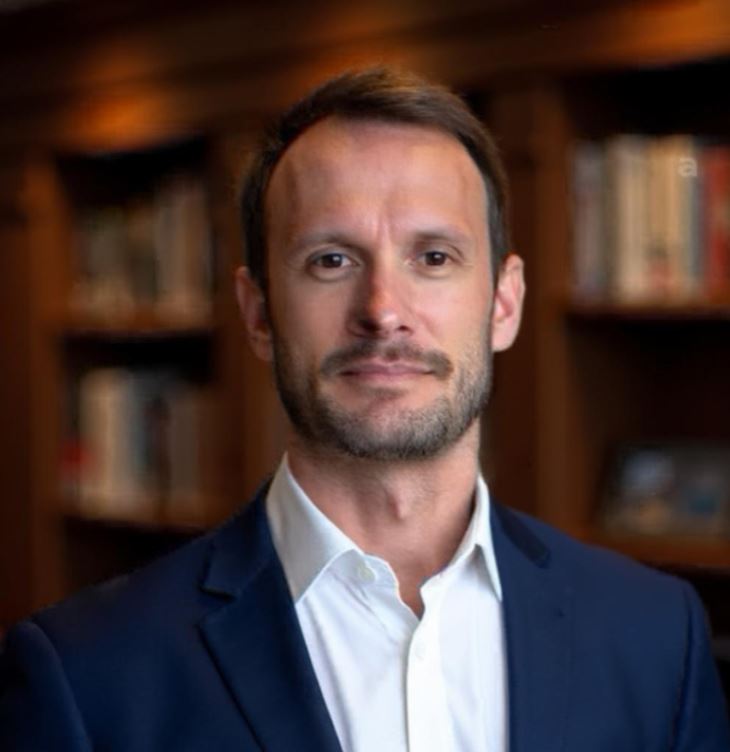
Ruben V. Feliu
Executive technical leadership across the full power-to-compute ecosystem — connecting energy strategy, grid engineering, controls, cybersecurity, program delivery and operations into one coordinated platform for AI infrastructure.
Successful AI infrastructure is not simply a data-center construction problem. It is an integrated power, controls, cybersecurity, digital infrastructure, commissioning and operations program extending from energy source to compute workload. This experience — including the conceptual digital twin above — reflects that systems view: every asset, workstream and delivery phase connected as one program. I bring that same view to client programs through advisory engagements.